
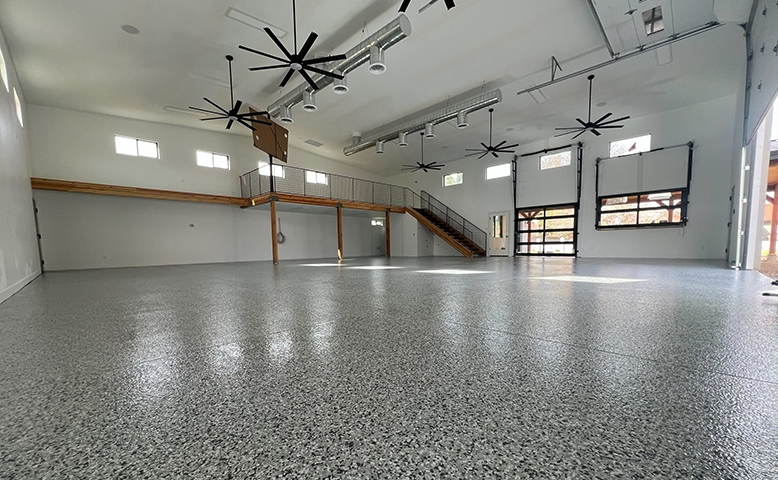
Garage floor Coating prep starts long before the roller meets concrete. Good prep turns a dusty, stained slab into a tough, clean surface that looks sharp and lasts. With a little planning and steady steps, your space feels calmer, safer, and easier to use every day. The goal is simple and clear: help the coating stick, cure right, and handle real life.
Set Your Goal and Pace
A solid plan saves time and effort. Start with a calm walkthrough of the garage. Note stains, cracks, and rough spots. Decide on the system you will use, whether epoxy coating, polyaspartic, or a urethane topcoat. Each system needs clean, open pores in the concrete, stable moisture, and a dust-free surface. From there, move through the steps in order, and keep the pace steady. Small, careful actions add up to strong results.
Gather the Gear
Having the right tools nearby keeps the process smooth. Keep it simple and stick to essentials.
- Stiff deck brush and long-handle squeegee
- Shop vacuum with a fine dust filter
- Concrete degreaser or TSP substitute
- Plastic scraper and putty knife
- Concrete crack filler or polymer repair mortar
- Diamond cup wheel or hand grinder for edges
- Floor grinder or etching solution (as your system allows)
- Painter’s tape, plastic sheeting, and drop cloths
- Anti-slip additive or flakes if your system uses them
With these items ready, the rest of the work stays focused and safe.
Clear and Protect the Space
Move out everything you can. Shelves near the floor should be empty or lifted. Sweep the slab to remove loose debris. Tape plastic over outlets, baseboard seams, water heaters, and steps. Seal the garage door edges with tape and plastic so wind does not push dust onto the slab. Good protection now prevents last-minute delays later.
Degrease and Deep Clean
Oil and tire residue block adhesion. Start by scraping heavy gunk, then apply a concrete degreaser. Scrub in sections. Rinse with clean water and squeegee toward the door. Repeat in stubborn areas. Keep rinsing until the rinse water runs clear and no soapy sheen remains. Let the slab dry fully. Clean concrete sets the stage for strong bonding.
Check moisture and climate.
Moisture under the slab can push against any coating. Use a simple plastic sheet test or a calcium chloride kit if your system recommends it. Watch local humidity and temperature as well. Most epoxy and polyaspartic products need a dry slab, stable air, and a specific temperature range. A small fan can move air, but keep the airflow gentle to avoid dust. If the weather looks humid or very cold, choose a later day. Patience here prevents peeling later.
Repair Cracks, Spalls, and Joints
Cracks and pitted spots need care. First, widen the hairline cracks slightly with a grinder so filler can lock in. Vacuum the dust. Apply a concrete crack filler or a fast-set polymer mortar as directed. Feather the edges so the patch sits flush. Keep control joints clear unless the system guides you in filling them. Smooth patches lead to an even coating and a clean look.
Remove Old Sealer or Paint
Old sealer, acrylic wax, or failing paint can block the new layer. A light hand grinder at the edges and a floor grinder on the main slab can open the surface and take off weak coatings. If grinding is not possible, an approved etching solution may work for some systems. Always follow manufacturer directions. The target is a clean, porous profile that feels like medium-grit sandpaper.
Create the Right Surface Profile
A good garage floor coating loves a mechanically profiled surface. Diamond grinding or shot blasting gives the best and most consistent result. Etching can help in certain cases. After profiling, vacuum thoroughly. Then mop with clean water and a microfiber pad to trap fine dust. Dust is sneaky, so take an extra pass along walls, steps, and door jambs. Clean profile equals strong adhesion.
Control Dust and Airflow
Right before mixing any coating, do a final dust sweep with the vacuum and a tack cloth. Close the door most of the way, leaving a small gap for airflow if needed. Turn off big fans that might kick up powder. Keep pets, leaves, and foot traffic away. A quiet, still space helps the coating settle and level.
Dry Fit Your Plan
Lay out rollers, squeegees, mixing pails, and spike shoes if your system calls for them. Stage base coat, color flakes, anti-slip additive, and topcoat in the order you will use them. Mark small zones on the floor with tape so you work in clean sections. Review the pot life and coverage rates printed on the labels. A short rehearsal in your head keeps the work smooth once the clock starts on the mix.
Safety First and Always
Concrete dust and coating fumes need care. Wear eye protection and a proper respirator. Use gloves and long sleeves. Keep a clean water bucket nearby for quick wipe-downs. Store chemicals off the slab on a piece of cardboard or plastic. Dispose of rags as directed by the product labels. Safe work supports steady work.
Plan Your Schedule and Drying Window
Look at the full timeline, from prep to final cure. Many epoxy coating systems require a dry, clean slab the day before coating. Some polyaspartic systems move faster. Respect the recoat windows between the base coat and topcoat. Allow the final layer to cure as directed. Light foot traffic usually comes first, then vehicle traffic later. A calm schedule prevents scuffs, dust, and marks.
Final Pre-Coat Checklist
Run through this list before you open any cans.
- Stains removed or sealed with approved primer
- Cracks repaired flush and sanded smooth
- Old paint or sealer removed from the path of the coating
- Concrete profile opened by grinding or etching
- Moisture checked and within product limits
- Temperature and humidity are in the recommended range
- Edges, steps, and walls masked and covered
If each box checks out, the coating step feels simple and steady.
Notes on Flakes and Anti-Slip
Decorative flakes add color and help hide small marks. Sprinkle them while the base coat is still wet, moving in light, and even passes for wet zones or where traction matters. Use an anti-slip additive in the topcoat. This keeps the floor safer when rain or snow meets the slab. A small touch of texture can make daily life easier.
Mind the Edges and Details
Edges make the floor look finished. Cut in along the walls with a brush or edging tool. Then, pull the product across the field with a squeegee and back-roll it with a clean roller. Keep a wet edge as you move. Swap rollers often so lint and clumps do not show in the film. Neat edges and a smooth field look clean, and they also help with long-term cleaning.
Keep It Simple on Maintenance
After the coating cures, keep sand and grit at the door with a mat. Mop with mild soap and water. Skip harsh acids and strong bleach. Quick cleanups stop stains from setting in. Simple care keeps the surface bright and safe for years.
A Calm, Ready Floor
With steady prep, your garage turns into a clear, useful space. The coating bonds better, cures stronger, and stands up to daily traffic. Tools roll easily. Tires do not leave deep marks. Spills clean up fast. The whole space feels tidy and ready for whatever the day brings. When you want help with garage floor Coating, Ridge Concrete Coatings Plus handles the service with care from start to finish.